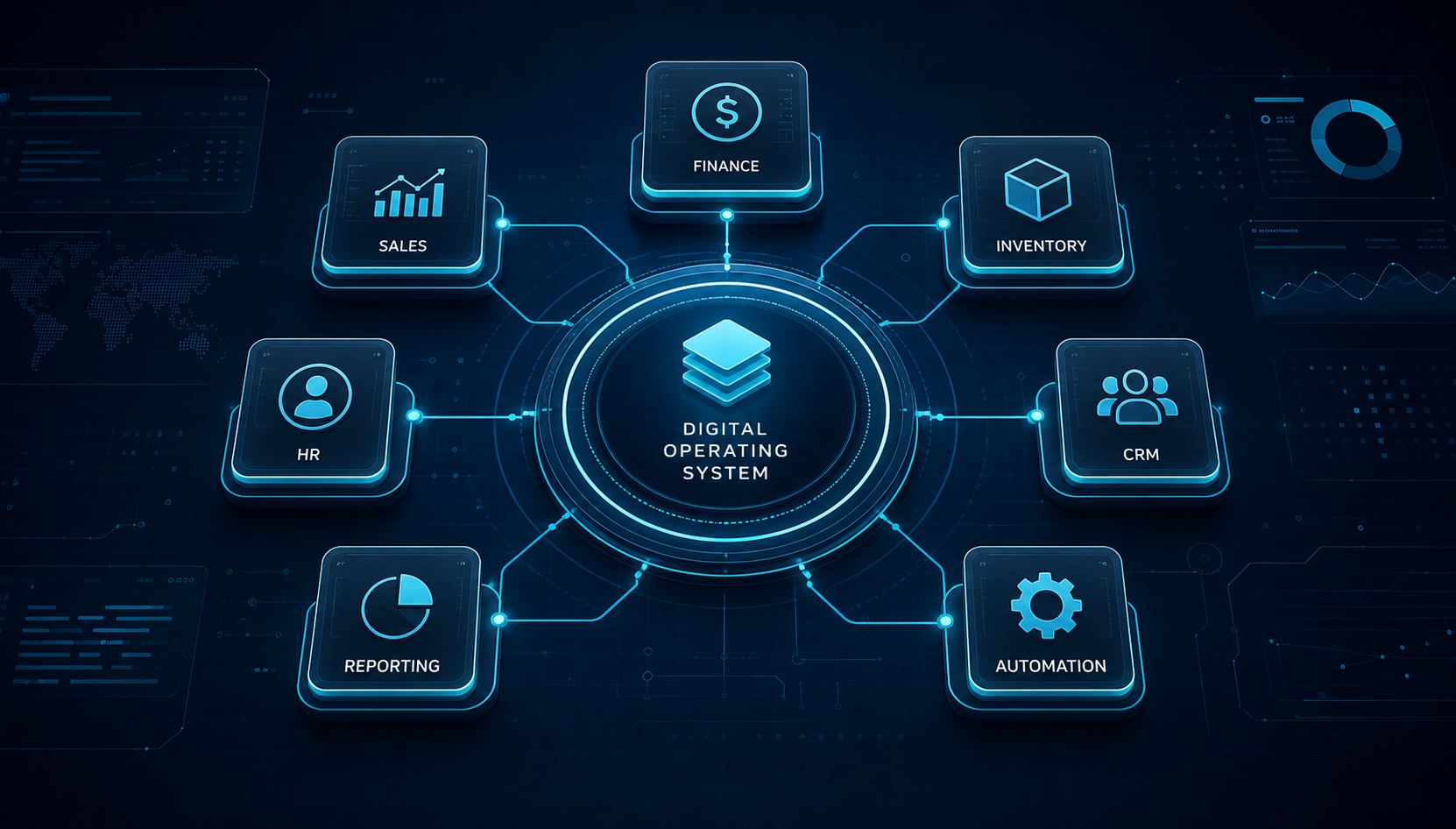
Most organizations assume that software is the difficult part of digital transformation.
They compare ERP systems. They request demos. They look at CRM features. They ask about automation, dashboards, AI, integrations, and reporting.
All of that matters.
But in many failed digital transformation projects, the real problem did not begin with the software.
It began before the software was even installed.
The business had unclear processes. Departments were working in silos. Ownership was poorly defined. Data was scattered across spreadsheets, emails, WhatsApp messages, and disconnected tools. Decision-makers did not have one reliable source of truth. Teams were doing things differently depending on who was handling the task.
Then the organization expected software to fix everything.
That is where many ERP, CRM, automation, and AI projects start to fail.
Not because the technology is weak. But because the business underneath the technology is not ready.
Digital transformation is not just about installing software. It is about redesigning how an organization operates, communicates, measures performance, and makes decisions.
At Webivon, we believe that successful technology implementation starts with operational clarity.
Before a business chooses software, it must first understand how work actually moves through the organization.
The Biggest Misunderstanding About Digital Transformation
Many businesses approach digital transformation as a software purchase.
They think the journey looks like this:
- Choose a system
- Install the system
- Train the team
- Start using it
- Become more efficient
In reality, successful digital transformation looks more like this:
- Understand the current business processes
- Identify operational bottlenecks
- Define responsibilities and approval flows
- Standardize workflows
- Clean and structure data
- Decide what should be automated
- Select the right software
- Configure the system around the business
- Train the team
- Continuously improve the system
The software comes later.
The foundation comes first.
A company that does not understand its own processes will struggle to implement any system properly.
An ERP system will not automatically fix poor procurement controls. A CRM will not automatically fix a weak sales process. Automation will not automatically fix unclear approvals. AI will not automatically fix messy data.
Technology amplifies the structure that already exists.
If the structure is clear, technology improves speed, visibility, and control.
If the structure is messy, technology often makes the mess more visible.
Why Digital Transformation Fails Before Implementation Begins
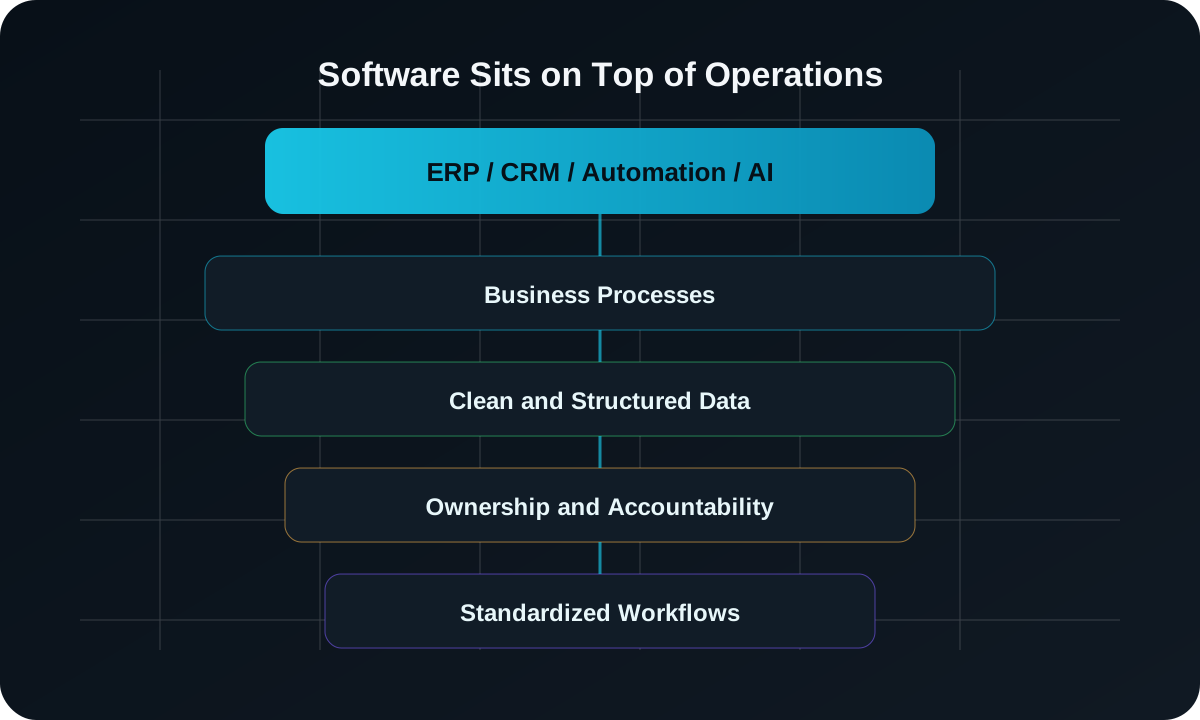
Digital transformation projects often fail early because organizations skip the most important preparation work.
They rush into tools before answering fundamental business questions.
How does a customer enquiry move from first contact to delivery" Who approves a purchase request" Where is supplier information stored" Which department owns customer data" What happens when inventory runs low" Who confirms payment" Which report is trusted by management" Where does the final truth live?
When these questions are not answered clearly, software implementation becomes confusing, expensive, and frustrating.
The implementation team starts asking for information that the business itself has not organized.
Departments give conflicting answers. Managers disagree on workflows. Users resist the new system because it does not reflect how they actually work. Data migration becomes difficult because old records are incomplete or inconsistent. Reporting becomes unreliable because different departments define metrics differently.
The result is a system that is installed, but not fully adopted.
And a system that is not adopted does not transform the business.
1. Lack of Business Process Clarity
The first major reason digital transformation projects fail is poor process clarity.
A business process is simply the way work gets done.
For example:
- How a customer order is received
- How a quotation is prepared
- How stock is requested
- How purchases are approved
- How invoices are issued
- How payments are reconciled
- How customer complaints are handled
- How reports are generated
Many organizations operate with informal processes.
People know what to do because they have been doing it for years. But the process is not documented, standardized, or visible.
This works when the business is small.
But as the organization grows, informal operations start creating problems.
Different employees handle the same task differently. Managers depend on specific people instead of reliable systems. New staff take longer to learn. Errors become harder to trace. Reports become inconsistent. Customer experience becomes unpredictable.
When such a business implements ERP, CRM, or automation software, the system forces the organization to define its processes.
That is when hidden confusion appears.
The issue is not the software.
The issue is that the business never clearly mapped how it operates.
Before any major system implementation, organizations should map their core processes from beginning to end.
This helps identify:
- Who starts each process
- Who approves each step
- What data is required
- Which documents are created
- Which departments are involved
- Where delays happen
- Which steps can be automated
- Which steps need better controls
Without process clarity, software implementation becomes guesswork.
2. Poor Ownership and Accountability
Digital transformation also fails when ownership is unclear.
Every process needs an owner.
Every data point needs an owner.
Every approval needs an accountable person.
Without ownership, systems become digital dumping grounds.
For example, in a CRM implementation, who owns customer records?
Is it sales" Is it marketing" Is it customer service" Is it finance?
If nobody owns the accuracy of customer data, the CRM will eventually become unreliable.
The same applies to ERP implementation.
Who owns product data" Who owns supplier records" Who owns inventory adjustments" Who owns pricing updates" Who owns branch-level reporting" Who approves procurement" Who reviews system usage?
When ownership is not defined, mistakes multiply.
One team assumes another team is responsible. Data is entered incorrectly. Approvals are delayed. Reports are questioned. Users blame the system instead of the process.
A successful digital transformation project requires clear accountability.
The organization must define:
- Process owners
- Data owners
- Approval owners
- Reporting owners
- System administrators
- Department champions
- Escalation points
Software can support accountability, but it cannot create accountability on its own.
That must come from leadership and operational design.
3. Disconnected Information Flow
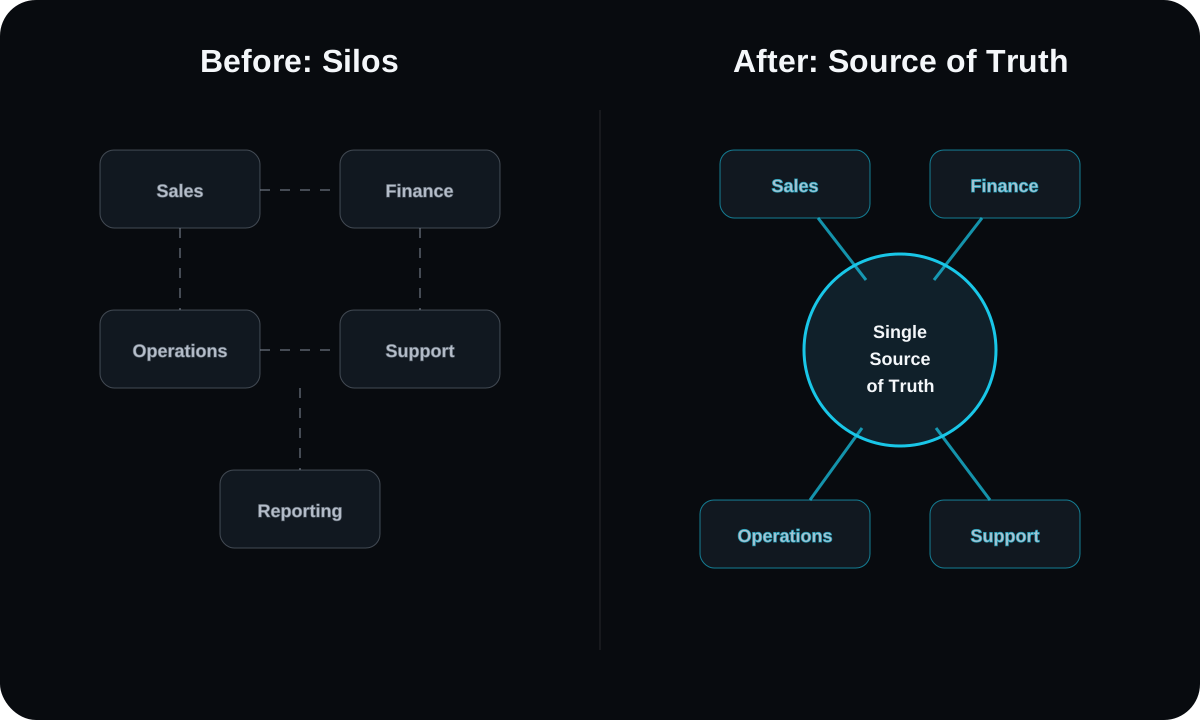
Most growing organizations do not have a data problem.
They have an information flow problem.
Data exists, but it is scattered.
Sales has its own records. Finance has its own reports. Operations has its own spreadsheets. Marketing has campaign data. Customer service has complaints and feedback. Management receives summaries from different departments.
Each team may have some version of the truth.
But nobody sees the whole picture.
This creates a dangerous situation.
Leaders make decisions using partial information. Teams debate whose numbers are correct. Reports take too long to prepare. Customers repeat the same information to different departments. Opportunities are missed because insights are trapped in silos.
Digital transformation should solve this by improving information flow.
A modern ERP, CRM, or automation platform should connect departments, centralize important data, and give decision-makers real-time visibility.
But this only works if the organization first understands how information should move.
For example:
- When a sales order is confirmed, should inventory update automatically"
- When stock falls below a certain level, should procurement be alerted"
- When a customer pays, should finance, sales, and operations see the update"
- When a complaint is raised, should management receive visibility"
- When a branch performs poorly, should the dashboard show why"
This is where business systems create value.
Not just by storing data, but by connecting the flow of information across the organization.
4. Weak Workflow Standardization
Another common reason digital transformation fails is lack of workflow standardization.
A workflow is the sequence of steps required to complete a task.
In many businesses, workflows are not standardized.
One branch follows one process. Another branch follows a different process. One manager approves requests through WhatsApp. Another uses email. One team updates spreadsheets daily. Another updates them weekly. One employee knows the "real way" things are done, but nobody else does.
This creates operational inconsistency.
When software is introduced, the business suddenly has to decide which workflow should become the standard.
That decision can create resistance.
People may say:
"This is not how we do it." "This system is slowing us down." "Our department is different." "We already have our own method." "This process does not work for us."
Sometimes the users are right.
Sometimes the system is poorly configured.
But often, the deeper issue is that the organization never agreed on a standardized workflow.
Before implementing ERP, CRM, or automation, businesses should identify which processes need standardization.
This includes:
- Sales pipeline stages
- Customer onboarding steps
- Procurement approval levels
- Inventory transfer procedures
- Payment confirmation processes
- Support ticket handling
- Reporting formats
- Document naming and storage rules
- Employee access permissions
Standardization does not mean removing flexibility.
It means creating a reliable operating structure so the business can scale without chaos.
5. No Single Source of Truth
A single source of truth means there is one trusted place where accurate business information lives.
Without it, transformation becomes difficult.
A business may have:
- Customer details in spreadsheets
- Orders in WhatsApp
- Invoices in accounting software
- Delivery updates in phone calls
- Stock records in notebooks
- Supplier prices in emails
- Reports prepared manually
This creates confusion.
Which file is correct" Which number is updated" Which department has the latest information" Which report should management trust?
A major goal of ERP and CRM implementation is to create a single source of truth.
But this requires discipline.
The organization must decide:
- Where customer data will live
- Where product data will live
- Where financial records will live
- Where operational updates will live
- Which system is the master system
- Which teams can edit specific data
- Which reports are official
If this is not defined, the business may end up with a new system while still relying on old spreadsheets and manual workarounds.
That is not transformation.
That is software sitting on top of operational confusion.
6. Technology Selection Before Business Diagnosis
Many organizations choose software too early.
They ask:
"Should we use a ready-made platform?" "Should we build custom software?" "Should we automate this with AI?" "Which CRM is best?"
These are valid questions.
But they should come after diagnosis.
The better questions are:
"What problem are we solving?" "Which processes are broken?" "Where are decisions delayed?" "Where is data duplicated?" "Which teams are disconnected?" "What does management need to see?" "What should be automated?" "What should remain manual?" "What will success look like?"
Without diagnosis, software selection becomes feature comparison.
But digital transformation is not about choosing the system with the longest feature list.
It is about choosing and configuring the system that best supports the organization's operations, growth model, and decision-making needs.
A business should not implement ERP because ERP is popular.
It should implement ERP because its operations require better integration, control, visibility, and scalability.
A business should not implement CRM because competitors are using CRM.
It should implement CRM because it needs a better way to manage leads, customers, follow-ups, sales pipelines, and customer relationships.
A business should not use AI because AI is trending.
It should use AI where there is clear operational value, such as faster reporting, customer support assistance, workflow automation, document processing, forecasting, or decision support.
Technology should serve the business model.
Not the other way around.
7. Ignoring Change Management
Even when the right system is selected, digital transformation can fail because people are not prepared for change.
Software changes how people work.
It changes responsibilities. It changes visibility. It changes reporting. It changes approval flows. It exposes delays. It reduces informal shortcuts. It makes performance easier to measure.
This can create resistance.
Employees may fear losing control. Managers may resist transparency. Teams may prefer old habits. Users may avoid the system if they do not understand its value.
That is why change management is critical.
Successful implementation requires:
- Clear communication from leadership
- Involvement of key users early in the project
- Department champions
- Practical training
- Simple documentation
- Support during go-live
- Feedback loops
- Continuous improvement after launch
Digital transformation is not just a technical project.
It is a people, process, and systems project.
If people do not adopt the system, the project fails regardless of how powerful the software is.
ERP Is No Longer Just a Transaction System
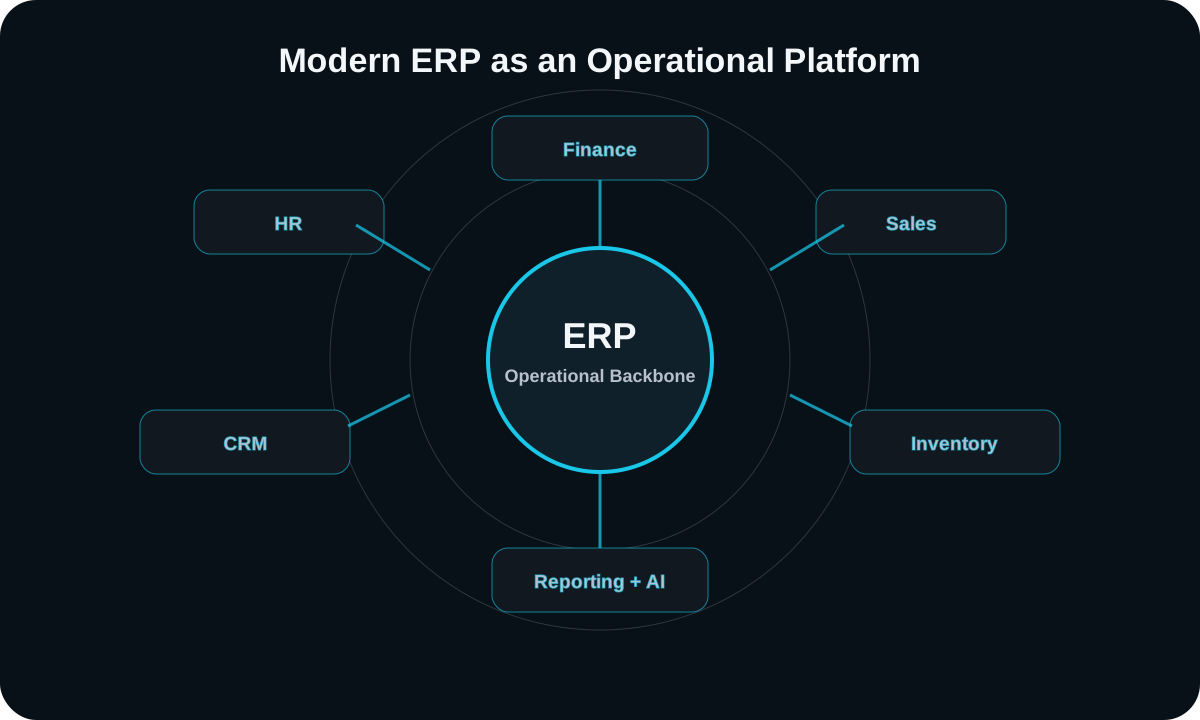
Traditionally, ERP systems were seen as back-office tools.
They helped businesses manage accounting, inventory, procurement, HR, manufacturing, and operations.
But modern ERP systems are evolving.
Today, ERP is becoming a connected operational platform.
A modern ERP can connect:
- Sales
- Finance
- Inventory
- Procurement
- Manufacturing
- HR
- Customer service
- Reporting
- eCommerce
- Point of sale
- Supplier management
- Business intelligence
- Automation
- AI-driven insights
This shift matters.
ERP is no longer only about recording what happened.
It is increasingly about helping leaders understand what is happening, why it is happening, and what should happen next.
That means ERP is becoming a decision-making platform.
For example:
- Management can see branch performance in real time
- Finance can track cash flow more accurately
- Procurement can respond to stock demand faster
- Sales teams can access customer history
- Operations can identify bottlenecks
- Leaders can monitor KPIs from one dashboard
- AI and automation can assist with forecasting, alerts, and recommendations
But again, the value of ERP depends on the quality of the business structure behind it.
A poorly implemented ERP becomes a complicated database.
A well-implemented ERP becomes the operational backbone of the organization.
Automation Also Depends on Process Clarity
Automation is powerful.
It can reduce manual work, improve speed, reduce errors, and free employees from repetitive tasks.
But automation only works well when the process is clear.
If a process is broken, automation can make the broken process move faster.
That is dangerous.
Before automating anything, businesses should ask:
- Is this process clearly defined"
- Is the workflow consistent"
- Are approval rules clear"
- Is the data reliable"
- Are exceptions handled properly"
- Does automation improve the process or simply hide the problem"
For example, automating customer follow-ups can improve sales performance.
But if the sales pipeline is unclear, customer data is incomplete, and no one owns follow-up responsibility, automation will not solve the real issue.
The same applies to finance automation, inventory alerts, HR workflows, procurement approvals, and customer support processes.
Automation should not replace thinking.
It should support a well-designed process.
AI Will Not Fix Poor Operations
Many businesses are now exploring AI.
AI can help with reporting, analysis, customer support, document processing, content generation, forecasting, and workflow assistance.
But AI depends heavily on data quality and operational structure.
If company data is scattered, outdated, incomplete, or inconsistent, AI will struggle to produce reliable results.
AI does not magically understand a business that has not organized its information.
For AI to be useful in operations, businesses need:
- Clean data
- Structured workflows
- Clear permissions
- Integrated systems
- Reliable reporting
- Defined business rules
- Good documentation
- Strong governance
AI works best when it is connected to a strong operational foundation.
That foundation often comes from ERP, CRM, automation, and properly designed business processes.
Without that foundation, AI becomes another disconnected tool.
With the right foundation, AI can become a powerful layer on top of business operations.
What Businesses Should Do Before Implementing Software
Before starting an ERP, CRM, automation, or AI project, organizations should prepare properly.
Here are the most important steps.
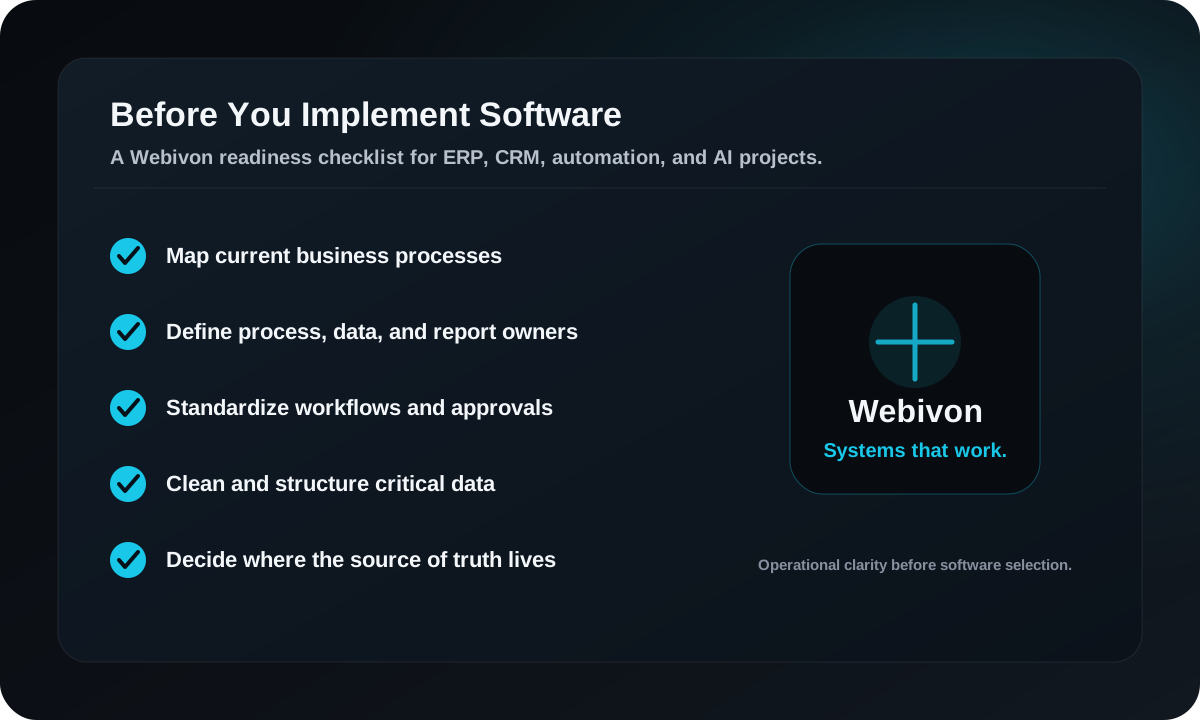
1. Map Current Processes
Start by documenting how work currently happens.
Do not begin with how the process should work.
Begin with reality.
Map the actual steps, tools, people, approvals, documents, and delays involved.
This reveals where the business is dependent on manual work, individual knowledge, duplicated data, or unclear communication.
2. Identify Bottlenecks
Look for the points where work slows down.
Common bottlenecks include:
- Manual approvals
- Poor stock visibility
- Delayed reporting
- Repeated data entry
- Unclear responsibilities
- Missing documents
- Department handover issues
- Payment confirmation delays
- Poor customer follow-up
- Lack of management visibility
Digital transformation should focus on removing or reducing these bottlenecks.
3. Define Ownership
Every process must have an owner.
Every critical data point must have an owner.
Every report must have an owner.
This prevents confusion after implementation.
Ownership creates accountability.
4. Standardize Workflows
Before configuring software, agree on how key workflows should operate.
This includes approvals, roles, notifications, reporting formats, data entry rules, customer stages, and escalation procedures.
The system should support standardized operations.
5. Clean and Structure Data
Data migration is one of the most underestimated parts of implementation.
Before moving data into a new system, businesses should clean:
- Customer records
- Supplier records
- Product lists
- Pricing data
- Inventory records
- Employee records
- Financial records
- Historical transactions
Bad data creates bad systems.
A new system with poor data will still produce poor reporting.
6. Define the Single Source of Truth
Decide which system will own which data.
For example:
- ERP may own inventory and finance data
- CRM may own lead and customer relationship data
- HR software may own employee data
- eCommerce may capture online orders
- BI dashboards may display consolidated reports
The business must define how these systems connect and where the final truth lives.
7. Involve the Right People
Digital transformation should not be driven by IT alone.
It should involve:
- Leadership
- Department heads
- Finance
- Operations
- Sales
- Customer service
- Key system users
- Implementation partners
The people who understand daily operations must be part of the process.
Otherwise, the system may look good in theory but fail in real use.
The Role of an Implementation Partner
A good implementation partner should not only install software.
They should help the business think.
They should ask the difficult questions before configuration begins.
How does the business operate" Where are the bottlenecks" Which workflows need standardization" Which reports matter most" Who owns each process" Which systems need to integrate" What should be automated now" What should be improved later?
The role of a technology partner is to translate business operations into a working digital system.
That requires more than technical setup.
It requires understanding processes, people, data, workflows, and growth strategy.
At Webivon, our approach is built around this belief:
Software is only valuable when it supports a clear business operating system.
That is why we focus on business systems, implementation, integration, automation, and long-term operational support.
We help organizations move beyond disconnected tools and build systems that actually work.
Digital Transformation Is Really Operational Transformation
The phrase "digital transformation" can sometimes sound too technical.
But at its core, digital transformation is operational transformation.
It is about helping a business operate better.
Better visibility. Better accountability. Better workflows. Better data. Better reporting. Better customer experience. Better decision-making.
The software is the visible layer.
The real transformation happens underneath.
It happens when a business understands how it works, improves how it works, and then uses technology to support that improved operating model.
That is the difference between installing software and building a system.
Final Thoughts
Most digital transformation projects do not fail because businesses chose the wrong software.
They fail because the organization was not ready for the software.
The processes were unclear. The data was messy. The workflows were inconsistent. Ownership was undefined. Departments were disconnected. Leadership expected technology to solve operational problems that had never been properly examined.
ERP, CRM, automation, and AI can create massive value.
But only when they are built on a strong foundation.
Before asking, "Which software should we use?" businesses should ask:
"How does our organization actually work?" "Where are we losing visibility?" "Which processes are slowing us down?" "Who owns what?" "Where should the truth live?" "What kind of operating system do we need to scale?"
That is where real transformation begins.
Not with software installation.
But with operational clarity.
Need Help Building Better Business Systems?
Webivon helps organizations design, implement, integrate, and maintain business systems that improve operations, visibility, and decision-making.
From ERP and CRM implementation to workflow automation, integrations, dashboards, and long-term system support, we help businesses build technology foundations that actually work.
If your organization is planning a digital transformation project, start with the right foundation.
Start with your processes. Start with your workflows. Start with visibility. Start with a system that works.
Webivon — Systems that work.