Many organizations are looking at AI as the solution to inefficiency.
They imagine AI agents answering customer questions, preparing reports, automating workflows, analyzing sales data, managing documents, supporting finance teams, assisting HR, and helping managers make faster decisions.
That future is real.
But there is a hard truth many businesses are not ready to face:
AI will not automatically fix broken operations.
In many cases, AI will expose them.
Poor processes become faster poor processes.
Disconnected systems become faster disconnected systems.
Bad data becomes faster bad data.
Unclear ownership becomes faster confusion.
Weak workflows become faster bottlenecks.
AI is powerful, but it is not magic.
It depends on the quality of the business structure underneath it.
If your organization has scattered data, unclear workflows, inconsistent reporting, disconnected systems, and poorly defined responsibilities, AI will not create order by itself.
It will reveal the disorder.
This is why the future of AI in business is not just about prompts, chatbots, or automation tools.
The real foundation is operational structure.
Businesses that want to benefit from AI must first understand their processes, integrate their systems, standardize their workflows, clean their data, and create a reliable source of truth.
At Webivon, we believe that AI success starts long before AI is introduced.
It starts with the way the business operates.
The Mistake Many Businesses Make About AI
Most organizations approach AI with the wrong question.
They ask:
"How can we use AI in our business?"
That is not a bad question, but it is incomplete.
The better question is:
"Is our business ready for AI?"
Because AI does not work in isolation.
AI needs access to information.
AI needs structured workflows.
AI needs clear business rules.
AI needs reliable data.
AI needs connected systems.
AI needs governance.
AI needs defined permissions.
AI needs a clear understanding of what should happen next in a process.
Without these foundations, AI becomes another disconnected tool.
The organization may have a chatbot, but customer data is still scattered.
It may have automated reporting, but the source data is unreliable.
It may have AI-generated recommendations, but no clear workflow for acting on them.
It may have AI agents, but no governance around what those agents can access or execute.
It may have automation, but the underlying process is still broken.
This is why AI implementation should not begin with tools.
It should begin with business process clarity.
AI Does Not Replace Process. It Depends on Process.
Every business is made up of processes.
A customer enquiry is a process.
A sales follow-up is a process.
A quotation is a process.
A purchase request is a process.
An inventory transfer is a process.
An invoice approval is a process.
A complaint resolution is a process.
A recruitment workflow is a process.
A management report is a process.
AI can assist these processes.
It can summarize, recommend, classify, draft, detect patterns, trigger workflows, generate reports, and help teams move faster.
But AI cannot reliably improve a process that the business itself has not defined.
For example, if a company wants AI to help with customer follow-ups, the business must first know:
- What qualifies as a lead"
- What are the stages of the sales pipeline"
- When should follow-up happen"
- Who owns each customer"
- What happens if the customer does not respond"
- What information should be recorded"
- Where should customer history live"
- Which system should trigger the next action"
Without these answers, AI has no stable process to support.
It may generate messages, but it will not fix the sales operation.
The same applies to finance, operations, HR, procurement, customer service, inventory, and management reporting.
AI can accelerate work.
But first, the work must be understood.
Poor Processes Become Faster Poor Processes
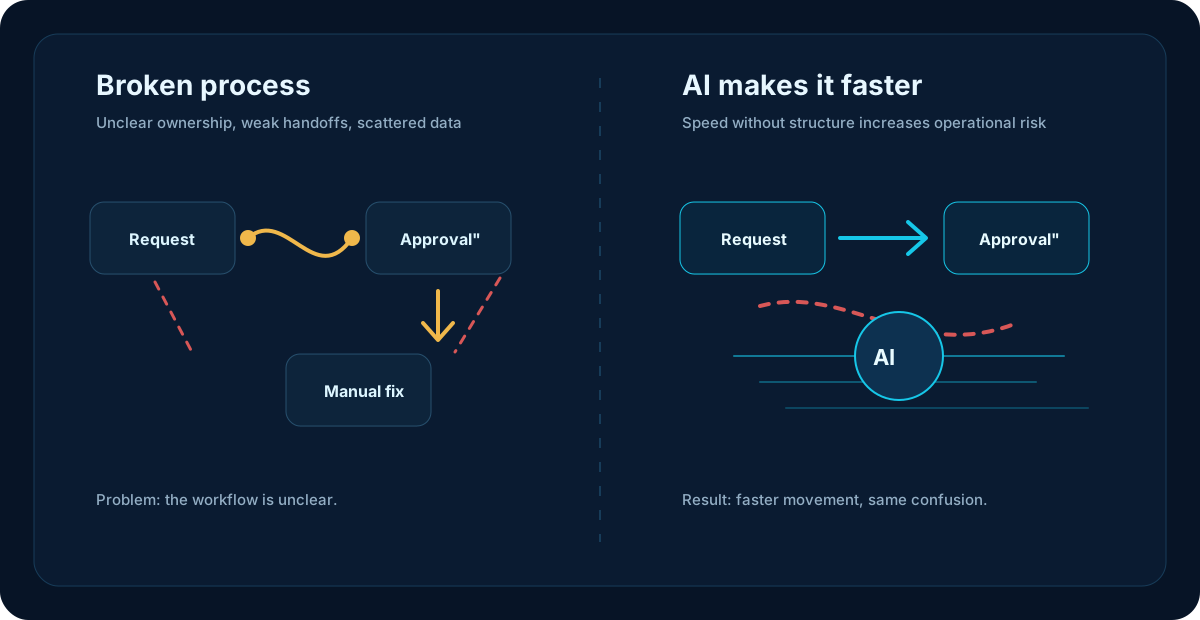
One of the biggest dangers of AI and business process automation is that organizations may automate inefficient workflows without improving them first.
This creates the illusion of progress.
Tasks move faster, but the underlying problem remains.
For example, a company may automate purchase approvals.
But if the approval structure is unclear, automation will simply move confusion faster from one person to another.
A company may automate customer support responses.
But if customer information is scattered across WhatsApp, email, spreadsheets, and different departments, the AI assistant will not have a complete view of the customer.
A company may automate reports.
But if each department uses different numbers, formats, and definitions, automated reports will still produce conflicting insights.
A company may introduce AI agents.
But if the organization has no clear permissions, escalation rules, or process ownership, those agents may create operational risk.
Automation does not automatically create discipline.
AI does not automatically create structure.
If the process is broken, AI can make the broken process faster, more visible, and more difficult to control.
That is why organizations must avoid the trap of automating chaos.
Before asking what AI can automate, leaders should ask:
"Should this process exist in its current form?"
Bad Data Becomes Faster Bad Data
AI depends on data.
But not just any data.
It needs accurate, structured, current, and accessible data.
Many organizations underestimate how messy their data really is.
Customer names are duplicated.
Supplier records are incomplete.
Product codes are inconsistent.
Inventory numbers are outdated.
Payment records are scattered.
Sales history is stored in different places.
Branch reports are prepared manually.
Employee records are not standardized.
Documents are saved across personal drives, emails, and WhatsApp chats.
When AI is introduced into this environment, the weakness becomes obvious.
AI may produce answers, but those answers are only as reliable as the information available to it.
If customer records are incomplete, AI cannot produce accurate customer intelligence.
If sales data is fragmented, AI cannot generate reliable forecasts.
If inventory data is wrong, AI cannot support purchasing decisions.
If financial data is delayed, AI cannot provide real-time visibility.
If operational data is not connected, AI cannot understand the full business context.
This is why data preparation is not a technical detail.
It is a business priority.
Before organizations can benefit from AI, they must improve how they collect, structure, store, and govern data.
That means defining:
- Where each type of data lives
- Who owns each data set
- Which system is the master system
- Who can edit records
- How data is validated
- How duplicate records are handled
- How departments share information
- Which reports are trusted by leadership
AI does not eliminate the need for data discipline.
It increases the need for it.
Disconnected Systems Become Faster Disconnected Systems
Many businesses already use multiple digital tools.
They may have accounting software, spreadsheets, CRM tools, WhatsApp communication, eCommerce platforms, POS systems, HR software, project management tools, and cloud storage.
The problem is not always the absence of software.
The problem is that the software is disconnected.
Sales has one system.
Finance has another.
Operations has another.
Customer service has another.
Management receives reports from all of them.
This creates silos.
A customer may place an order online, speak to sales on WhatsApp, make payment through mobile money, receive delivery updates by phone, and complain through social media.
If those touchpoints are not connected, the business cannot see the full customer journey.
Now add AI into this environment.
The AI assistant may answer questions, but it cannot act intelligently if it cannot access connected information.
It may know what a customer asked, but not what they bought.
It may know an order exists, but not whether payment was confirmed.
It may know a complaint was raised, but not whether operations resolved it.
It may generate a report, but not from a complete operational picture.
This is why business systems integration is critical.
AI becomes more useful when systems are connected.
A connected business can give AI access to clean, relevant, and contextual information.
A disconnected business gives AI fragments.
And fragmented information leads to fragmented intelligence.
Why ERP Matters Before AI
ERP implementation is often misunderstood.
Many people think ERP is just accounting, inventory, procurement, HR, or back-office administration.
But modern ERP is more than a transaction system.
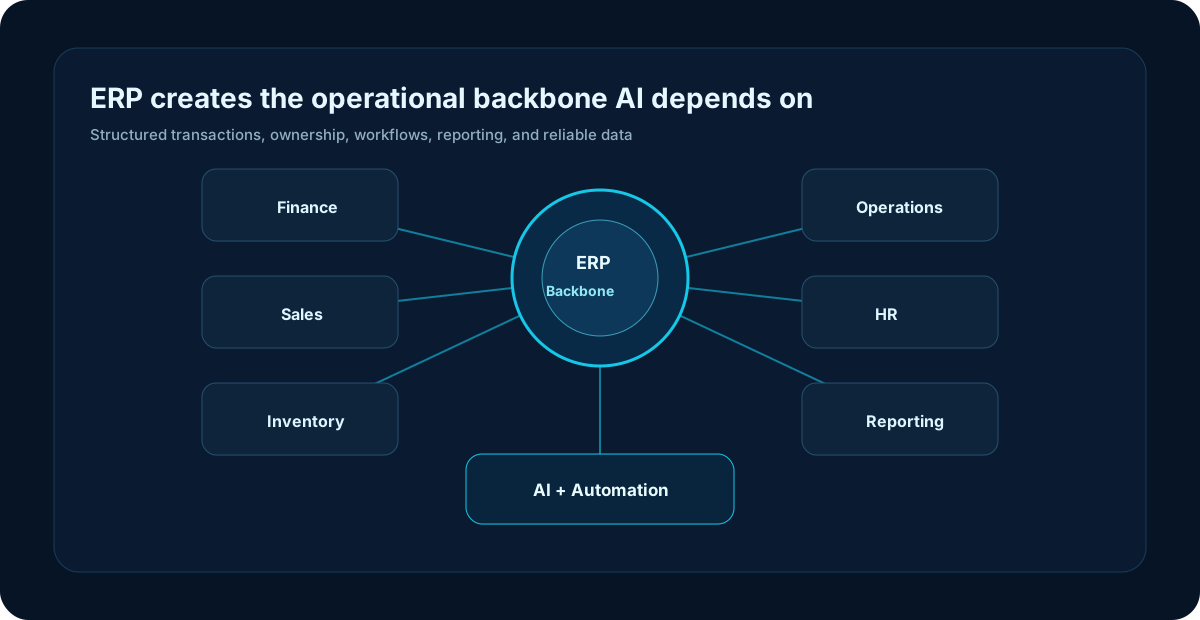
It can become the operational backbone of the organization.
A well-implemented ERP system helps connect:
- Finance
- Sales
- Inventory
- Procurement
- Operations
- Manufacturing
- HR
- Customer service
- Branch management
- Reporting
- Approvals
- Workflows
- Business intelligence
This matters because AI needs a reliable operational backbone.
If the ERP system is properly configured, AI can work with structured data and clear workflows.
It can help analyze performance.
It can assist with forecasting.
It can support procurement planning.
It can summarize operational activity.
It can detect anomalies.
It can help managers understand trends.
It can support workflow automation.
It can help teams make faster decisions.
But if ERP is poorly implemented, AI will inherit the same problems.
Bad product data.
Unclear workflows.
Incomplete records.
Weak user adoption.
Poor reporting structures.
Disconnected modules.
No process ownership.
ERP matters because it creates the operational structure AI depends on.
Before a business tries to become AI-powered, it must first become process-aware, data-disciplined, and system-driven.
ERP can provide that foundation when implemented properly.
Process Standardization Comes Before AI Workflow Automation
AI workflow automation sounds exciting.
But workflow automation only works when workflows are mature enough to automate.
A workflow is a sequence of steps.
For example:
A customer enquiry comes in.
The enquiry is assigned to sales.
Sales qualifies the customer.
A quotation is prepared.
The customer approves.
Finance confirms payment.
Operations fulfills the order.
Customer service follows up.
Management receives a report.
If this workflow is clear, AI and automation can improve it.
AI can summarize the enquiry.
Automation can assign the lead.
The CRM can trigger follow-up reminders.
The system can generate the quotation.
Finance can receive a payment alert.
Operations can receive a task.
Customer service can be notified after delivery.
Management can see pipeline and conversion reports.
But if the workflow is unclear, automation becomes dangerous.
Who should receive the enquiry?
What qualifies the customer?
Who approves discounts?
Which quotation template should be used?
When does finance get involved?
How does operations know what to fulfill?
Who follows up after delivery?
What happens if the customer complains?
If these questions are not answered, AI workflow automation will not solve the problem.
It will expose the absence of process maturity.
That is why organizations should first standardize key workflows before introducing automation.
This includes:
- Sales workflows
- Customer onboarding workflows
- Procurement workflows
- Inventory workflows
- Finance approval workflows
- HR workflows
- Support workflows
- Reporting workflows
- Document management workflows
Standardization does not mean making the business rigid.
It means creating enough structure for the business to scale.
AI performs better when the organization has predictable, documented, and measurable workflows.
Customer Intelligence Requires Integrated Systems
Many organizations want better customer intelligence.
They want to know:
Who are our best customers?
Which customers are most likely to return?
Which products do they buy?
Which channels bring the highest-value customers?
Which customers are at risk of leaving?
Which campaigns generate repeat purchases?
Which customer segments are most profitable?
Which complaints affect retention?
Which sales activities lead to conversion?
AI can help answer these questions.
But only if the business has integrated customer data.
Customer intelligence is not created from one system alone.
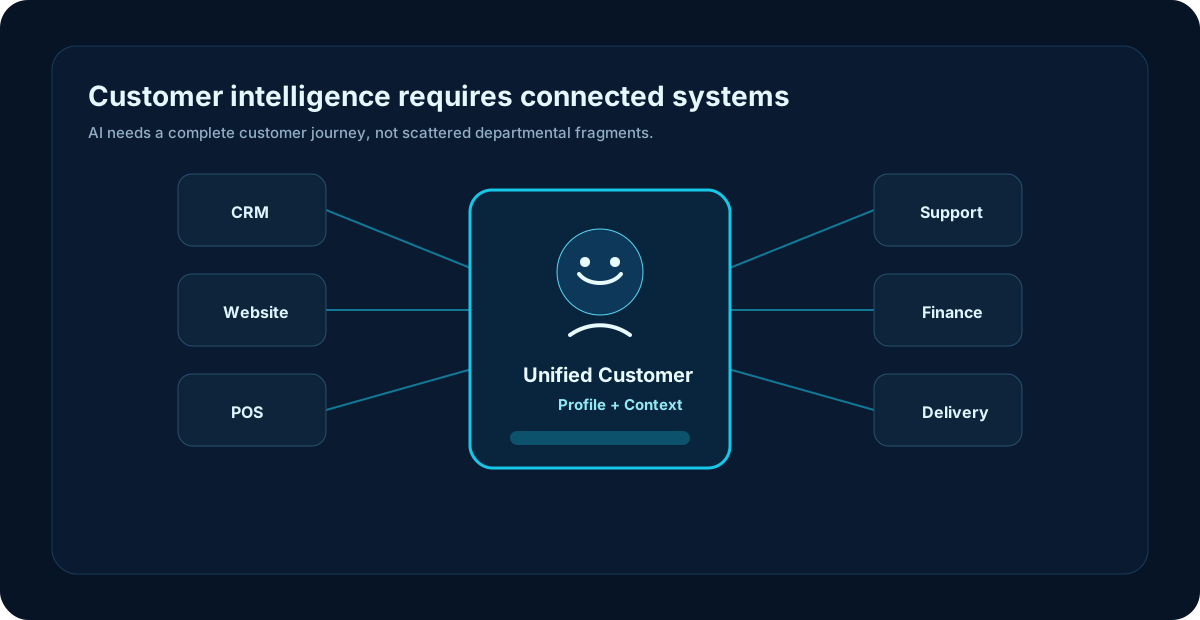
It may require data from:
- CRM
- Website forms
- eCommerce
- POS
- Customer support
- Email marketing
- WhatsApp communication
- Finance
- Loyalty systems
- Delivery operations
- Sales teams
- Campaign platforms
If these systems are disconnected, customer intelligence becomes incomplete.
Marketing may know who clicked an ad.
Sales may know who requested a quotation.
Finance may know who paid.
Operations may know who received delivery.
Customer support may know who complained.
But leadership may not see the complete customer journey.
AI cannot create a complete customer view if the business has not connected the customer journey.
This is why customer intelligence depends on business systems integration.
A business that wants AI-powered customer intelligence must first connect its customer data.
That means defining:
- Where customer records live
- How leads become customers
- How customer interactions are tracked
- How sales, finance, and operations share customer information
- How customer value is measured
- How repeat purchases are identified
- How complaints and service history are recorded
- How dashboards present customer insights
Without integrated systems, customer intelligence remains a guess.
With integrated systems, AI can help turn customer data into action.
Operational Visibility Is the Real Advantage
AI is powerful, but operational visibility is the real advantage.
Operational visibility means leaders can see what is happening inside the business clearly and reliably.
They can see sales performance.
They can see stock movement.
They can see cash flow.
They can see customer activity.
They can see procurement delays.
They can see branch performance.
They can see support issues.
They can see workflow bottlenecks.
They can see where decisions are stuck.
Without visibility, leaders operate through assumptions.
They depend on manual updates, delayed reports, and department-level explanations.
With visibility, they can act faster and more accurately.
AI becomes more valuable when it operates on top of visibility.
For example, AI can help answer:
- Why did sales drop this week"
- Which branch is underperforming"
- Which products are moving slowly"
- Which customers should we follow up with"
- Which suppliers are causing delays"
- Which operational tasks are overdue"
- Which process is creating the most friction"
- Which customer segment is most profitable"
But AI can only answer these questions if the underlying systems are capturing the right data.
This is why operational visibility should come before advanced AI.
The goal is not just to have AI.
The goal is to have a business that can see itself clearly.
The Rise of Agentic AI in Business Operations
The next stage of AI in business is not just chatbots.
It is agentic AI.
Agentic AI refers to AI systems that can take actions, follow workflows, use tools, interact with systems, and complete tasks with some level of autonomy.
In business operations, this could include AI agents that:
- Create support tickets
- Draft customer replies
- Prepare sales follow-ups
- Generate quotations
- Review documents
- Summarize meetings
- Update CRM records
- Trigger approval workflows
- Analyze inventory trends
- Prepare management reports
- Monitor operational exceptions
- Assist finance teams with reconciliations
- Recommend next steps based on business rules
This is where business technology is heading.
But agentic AI introduces a new level of responsibility.
If an AI agent can take action, the business must define what actions it is allowed to take.
That requires:
- Clear permissions
- Defined workflows
- Human approval points
- Audit trails
- Data access rules
- Escalation paths
- Error handling
- Governance
- Process ownership
Without these controls, AI agents can create risk.
They may act on incomplete data.
They may trigger the wrong workflow.
They may access information they should not access.
They may make recommendations without enough context.
They may create confusion between departments.
This is why agentic AI requires operational maturity.
The more autonomous the system becomes, the stronger the business foundation must be.
AI Will Separate Structured Businesses From Unstructured Businesses
The future will not belong simply to companies that use AI.
Almost everyone will use AI in some form.
The advantage will belong to organizations that can integrate AI into their operations properly.
That means businesses with:
- Clear processes
- Standardized workflows
- Clean data
- Connected systems
- Strong ERP or CRM foundations
- Reliable reporting
- Defined ownership
- Good governance
- Operational visibility
- Continuous improvement culture
These businesses will use AI to improve speed, decision-making, customer experience, and productivity.
Unstructured businesses will struggle.
They may use AI tools, but the tools will sit on top of operational confusion.
They will have more dashboards, but not more clarity.
More automation, but not better control.
More AI-generated content, but not better customer intelligence.
More software, but not better operations.
AI will expose the difference between businesses that are truly system-driven and businesses that are still dependent on manual coordination.
This is why business systems matter.
How Organizations Should Prepare for AI and Business Process Automation
Before adopting AI at scale, businesses should prepare their operational foundation.
Here are the key steps.
1. Map Core Business Processes
Start by documenting how work actually happens.
Do not begin with software.
Begin with the business.
Map processes such as:
- Lead management
- Sales follow-up
- Quotation and order processing
- Procurement
- Inventory movement
- Finance approvals
- Customer service
- HR and employee requests
- Reporting
- Document management
This helps the organization understand what should be improved before automation begins.
2. Identify Broken Workflows
Look for processes that are slow, unclear, duplicated, or dependent on specific individuals.
Common signs of broken workflows include:
- Repeated manual data entry
- Delayed approvals
- Conflicting reports
- Missing documents
- Unclear handovers
- Frequent customer follow-up failures
- Overdependence on WhatsApp
- Too many spreadsheets
- No real-time visibility
- Staff asking the same questions repeatedly
These are the areas where AI may expose problems.
They are also the areas where improvement can create strong business value.
3. Standardize Before Automating
Do not automate a process just because it is repetitive.
First, ask whether the process is correct.
A bad process automated is still a bad process.
Before automation, define:
- The correct workflow
- The responsible person or department
- Required data
- Approval rules
- Exceptions
- Escalation steps
- Reporting needs
- Success metrics
Once the process is standardized, automation becomes more reliable.
4. Build a Single Source of Truth
AI needs trusted information.
Businesses should define where key information lives.
For example:
- Customer data may live in CRM
- Financial data may live in ERP or accounting software
- Product and stock data may live in ERP
- Employee data may live in HR software
- Documents may live in a structured cloud system
- Dashboards may consolidate information from multiple systems
The goal is to reduce confusion and create one reliable version of business truth.
5. Integrate Business Systems
AI becomes more powerful when systems are connected.
Businesses should identify which systems need to communicate.
This may include:
- ERP and CRM integration
- Website and CRM integration
- eCommerce and inventory integration
- POS and finance integration
- Customer support and CRM integration
- WhatsApp and customer records integration
- HR and payroll integration
- Dashboards and operational systems integration
Integration allows AI to understand context across departments.
Without integration, AI only sees fragments.
6. Improve Data Quality
Clean data is essential.
Businesses should review:
- Customer records
- Supplier records
- Product lists
- Pricing data
- Inventory records
- Employee records
- Financial records
- Historical transactions
- Support tickets
- Sales pipeline data
The goal is to remove duplicates, correct errors, standardize formats, and define ownership.
Poor data quality weakens AI performance.
Strong data quality improves it.
7. Define AI Governance
Before AI agents start acting inside business systems, organizations must define governance.
This includes:
- What AI can access
- What AI can change
- What requires human approval
- Who reviews AI outputs
- How actions are logged
- How errors are handled
- Which teams own each AI workflow
- How sensitive data is protected
- How performance is monitored
Governance is not just a legal or IT concern.
It is an operational requirement.
8. Start With High-Value Use Cases
Businesses should not try to automate everything at once.
Start with use cases that are clear, measurable, and valuable.
Examples include:
- Customer enquiry routing
- Sales follow-up reminders
- Support ticket classification
- Automated report summaries
- Invoice or document processing
- Inventory alerts
- Lead scoring
- Customer segmentation
- Internal knowledge search
- Management dashboard insights
- Workflow notifications
The best AI use cases are connected to real operational pain.
The Future: Connected Operational Platforms
The future of business technology is moving toward connected operational platforms.
This means ERP, CRM, automation, AI, reporting, customer intelligence, and workflow orchestration will increasingly work together.
Instead of separate tools, businesses will need connected systems.
Instead of manual reports, they will need live dashboards.
Instead of scattered customer records, they will need unified customer views.
Instead of isolated automations, they will need workflow orchestration.
Instead of simple chatbots, they will need AI agents connected to real business systems.
This future will reward organizations that prepare now.
The businesses that win will not be the ones that simply install the most tools.
They will be the ones that build the strongest operational foundations.
Webivon's Perspective: AI Should Sit on Top of Strong Business Systems
At Webivon, we do not see AI as a shortcut around business structure.
We see AI as a powerful layer that should sit on top of strong business systems.
That means before AI can deliver meaningful value, the business needs:
- Clear processes
- Integrated systems
- Standardized workflows
- Reliable data
- Strong ERP or CRM foundations
- Operational visibility
- Defined ownership
- Practical automation
- Long-term system support
This is where many organizations need help.
They do not just need another tool.
They need a technology partner who can help them understand their operations, design better workflows, implement the right systems, integrate their platforms, and prepare for AI-driven automation.
That is the role Webivon is built to play.
We help businesses move from disconnected tools to connected systems.
From scattered data to operational visibility.
From manual processes to structured workflows.
From software implementation to business transformation.
Because AI will not fix a broken operating model.
But with the right foundation, AI can help a business become faster, smarter, and more scalable.
Final Thoughts
AI will change how businesses operate.
But it will not treat every business equally.
Organizations with strong processes, clean data, integrated systems, and clear ownership will benefit faster.
Organizations with broken workflows, scattered information, poor reporting, and disconnected departments will feel exposed.
That is the reality of AI and business process automation.
AI does not remove the need for operational discipline.
It increases the need for it.
Before businesses rush into AI agents, workflow automation, or advanced analytics, they must first ask:
Are our processes clear?
Is our data reliable?
Are our systems connected?
Do we have one source of truth?
Are our workflows standardized?
Do we have operational visibility?
Do we know what AI should actually improve?
The future belongs to businesses that can answer those questions clearly.
Because the companies that win with AI will not just be AI-powered.
They will be system-driven.
Build the Foundation Before You Automate
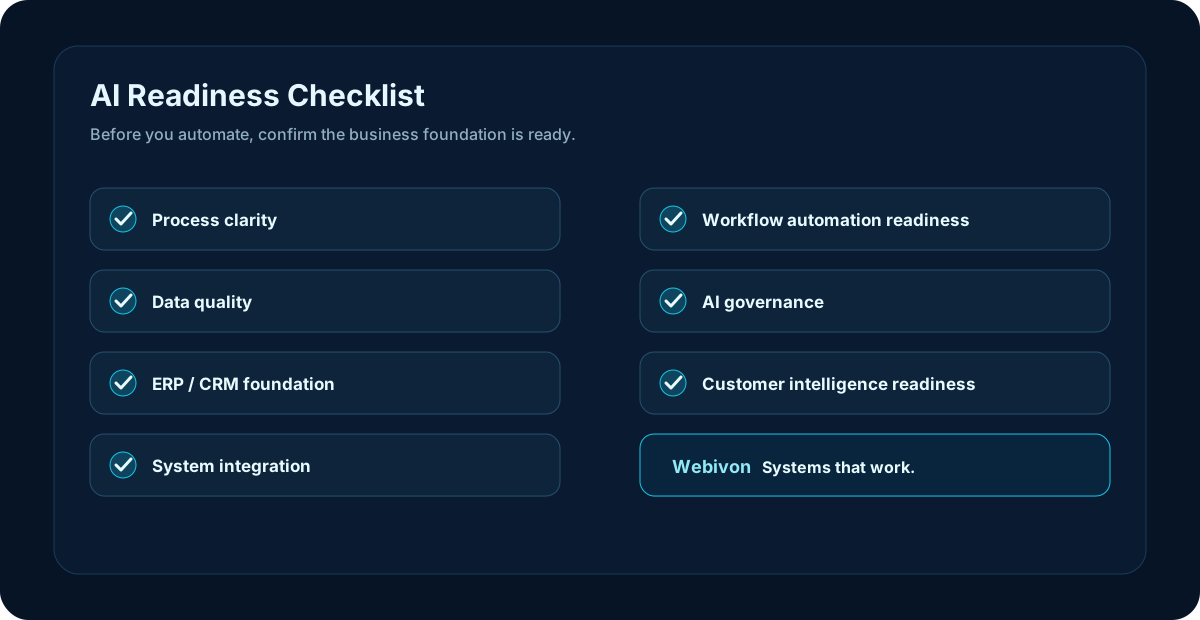
Webivon helps organizations design, implement, integrate, and maintain the business systems required for modern operations.
From ERP and CRM implementation to workflow automation, business systems integration, operational dashboards, and AI-ready infrastructure, we help businesses build systems that work.
If your organization is preparing for AI, automation, or digital transformation, start with the foundation.
Start with your processes.
Start with your data.
Start with your systems.
Start with operational visibility.
Webivon — Systems that work.